Healthy by Nature: Policy Practices Aimed at Maximizing the Human Behavioral Health Benefits of Nature Contact
Citation
LoTemplio, S., McDonnell, A. S., Nadkarni, N., Walker, S., Gallegos-Riofrío, C. A., Scott, E. E., … Lawler, J. … & Strayer, D. L. (2023). Healthy by nature: Policy practices aimed at maximizing the human behavioral health benefits of nature contact. Policy Insights from the Behavioral and Brain Sciences, 10(2), 247-255. doi.org/10.1177/23727322231197578
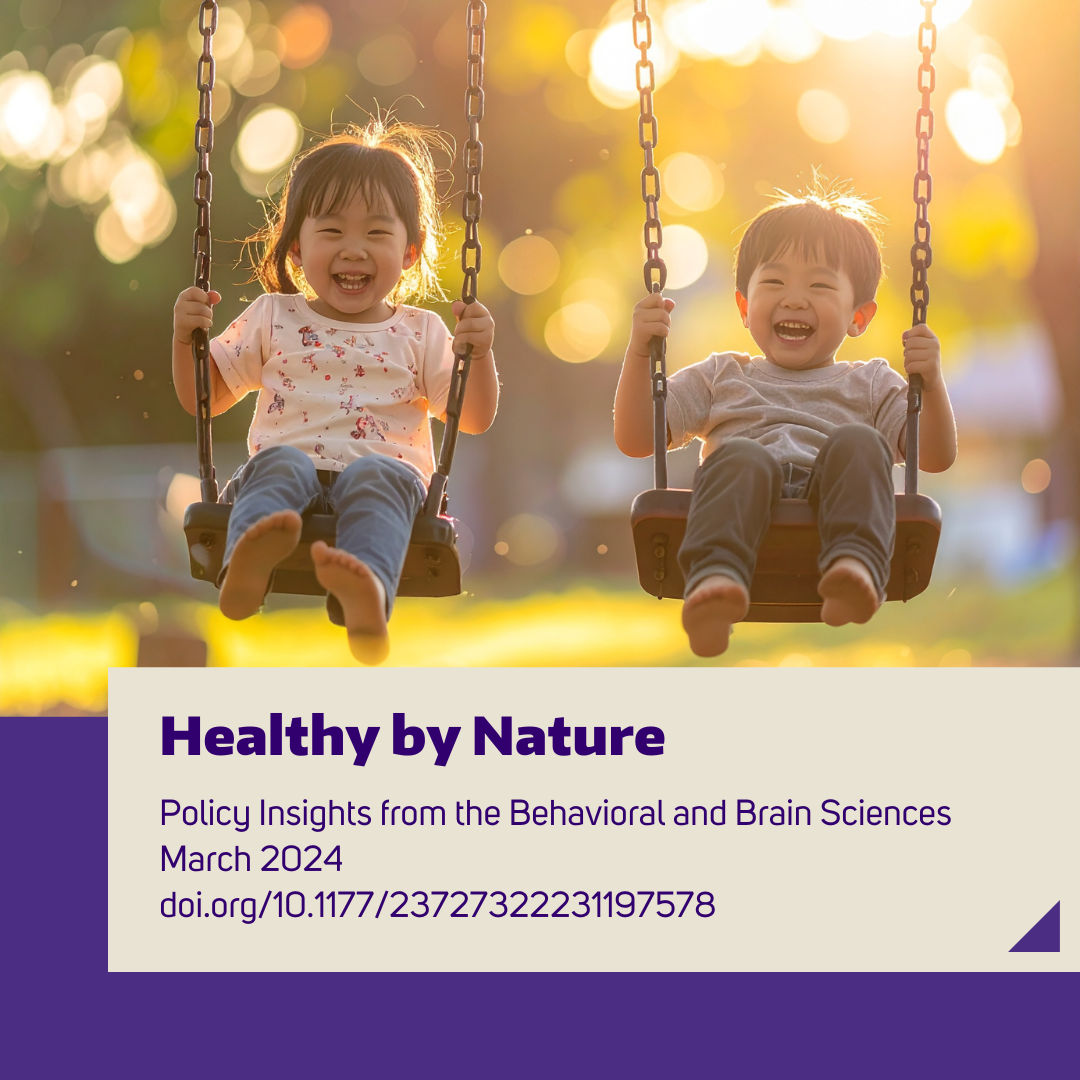 Research shows that spending time in nature can be good for our health and well-being. It may help us improve our executive functioning abilities, recover from stress, improve our mental health, and even support better learning. Communities with more trees, parks, and green spaces also tend to have better overall health.
However, most studies so far have focused on specific groups of people and often overlook the fact that different cultures view and experience nature in different ways. Because of this, it can be challenging for policymakers to create nature-based policies that work well for everyone—especially in a culturally diverse country like the United States.
To address this, experts recommend that policies aim to give as many people as possible the benefits of spending time in nature, while also being flexible enough to respect and adapt to the unique needs of different communities.
Abstract
 Research suggests that spending time in nature is associated with numerous human behavioral health benefits, including improved executive functioning abilities, enhanced recovery from stressful situations, better mental health, and better educational outcomes. Greener neighborhoods also tend to have positive population-level health outcomes. Although promising, much of this research has focused primarily on selective populations and fails to account for cultural differences in how “nature” is conceptualized. Therefore, challenges may arise as policymakers aim to implement nature-based policies in their communities, given the immense cultural diversity of the United States alone. Given this ever-present challenge in behavioral sciences, policy recommendations aim both to maximize benefits of nature contact and to employ a flexible equity lens that allow for differences according to community need.