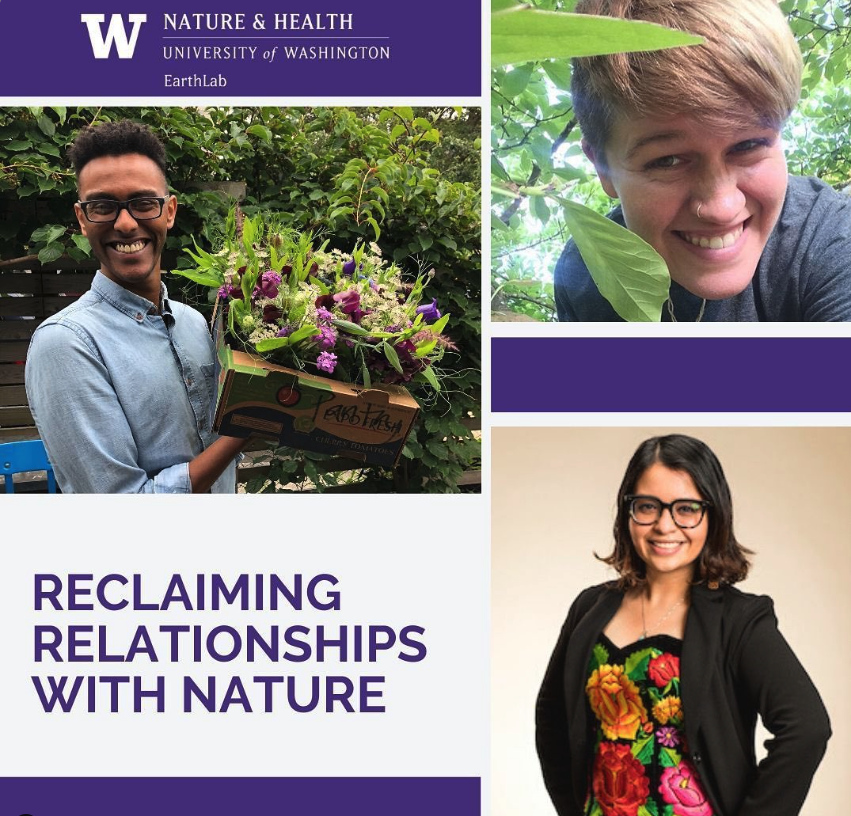
Reclaiming Relationships with Nature
Institutional racism remains present in Black and Indigenous communities—especially with COVID-19 and the recent murders of our Black relatives. During this June 2020 talk, Nat, Jessica, and Jules came together to discuss how our intersectional identities weave experiences in relationships with nature.
Read moreBlack Lives Matter
The attack on Christian Cooper while birding in Central Park so painfully reminds us how inequitable our access to nature is. The recent killings by vigilantes of Ahmaud Arbery (1994-2020). The killings by police of Breonna Taylor (1993-2020), George Floyd (1976-2020), and Tony McDade (1982-2020) a Black transgender man, remind us yet again that this inequity is driven by deep-seated systemic racism.
Read moreGrowing Old Tales from an Urban Canopy: Reciprocity
Reciprocity · Growing Old: Tales from an Urban Canopy · May 20, 2020
Featuring Kathy Wolf, Nature and Health researcher
Episode Summary
Explore the role that trees play in human health and urban climate resilience, particularly amid a pandemic.
The Importance of Relative Wildness in an Urban Landscape: A Case Study of Discovery Park
While there is a growing body of evidence in support of the importance of nature for human health and well-being, the effects of interacting with relatively wild forms of nature – compared to more “urban” forms – are not as well understood.
Read moreOlder Adult Walking Programs in Urban Park and Indoor Environments – Implementation and Perceived Restorativeness
Green exercise, or exercise performed in a natural environment, has additional health benefits than exercise alone. However, older adults may experience barriers to getting outside including distance from natural spaces. Therefore, urban parks and forests provide older adults with an opportunity to engage in accessible green exercise.
Read moreTurning to Technology for Nature Could Help Us Feel More Connected, Experts Say
Sarah Grothjan · REI · April 29, 2020
Featuring Peter Kahn, member of the Center’s Research Collaborative and Steering Committee
Digital nature could also help with feelings of loneliness. A 2018 University of Washington (UW) study showed that university professors who worked in an office with a 50-inch plasma TV that depicted restorative nature scenes—serving, essentially, as a digital window—reported feeling connected to the outdoors and to the wider social community.
Continue Reading at REI
Publication in Press
Focusing Attention on Reciprocity between Nature and Humans
Can be the Key to Reinvigorating Planetary Health
Usha Varanasi, Ph.D., College of the Environment, University of Washington
In Press, Ecopsychology Journal, http://home.liebertpub.com/publications/ecopsychology/300/overview
Mary Ann Liebert Inc., Publishers
This timely essay raises the importance of shifting individual and societal attention to preventive and precautionary measures to maintain human and ecological health.

Finding Respite in the Nature Nearby to Combat Stress
Kiyomi Taguchi · UW News · April 17, 2020
Featuring Kathleen Wolf, Nature and Health Researcher
Taking a walk can make you feel better, but is there scientific research? Yes, says Kathleen Wolf.
Dose of Nature at Home Could Help Mental Health, Well-Being During COVID-19
Michelle Ma · UW News · April 16, 2020
Featuring Kathleen Wolf and Dr. Pooja Tandon, Nature and Health researchers
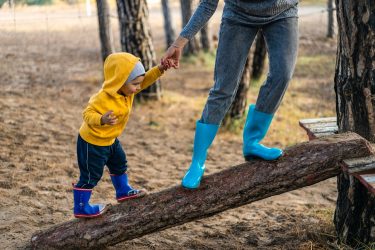
As residents in Washington and much of the nation are confined to their homes and apartments under COVID-19 restrictions, many people are missing their usual “nature escapes”: that hike to a serene lake, a mountain bike trail through the woods, or even a favorite campground by a river where you can relax and recharge.
Nature Interaction and Human Well-being: A Hypothesized Model of Feeling a Sense of Presence in Nature
Over the last three decades, there has been an increasing and convincing body of evidence for the physical and mental health benefits of interacting with nature. However, there has been surprisingly little focus on how people’s psychological states during a nature experience may influence these benefits.
Read more