An Anchor Through Shifting Tides: Community Dinners Foster Connection, Collaboration for Nature and Health
By: Tess Wrobleski, Project Specialist, EarthLab
What keeps a tradition alive? Is it the strength of an idea? The dedication of the people who uphold it?
For the Nature and Health community dinner, it’s both. And more.
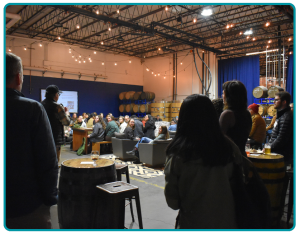
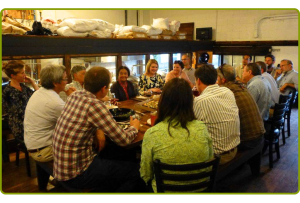 For a decade, the organization has hosted quarterly dinners to bring together transdisciplinary, intergenerational groups of people who care about the intersections of nature and health. The first dinner was held in 2015 at Ravenna Brewing and welcomed roughly twenty people. On October 14 of this year, at Fremont Brewing Company, more than seventy people gathered for the 10th year of community dinners.
The original idea of the community dinner was to create a space where researchers, community organizers and healthcare providers interested in nature and health could gather. “Our hope was to spark unexpected partnerships, foster new collaborations, and build a community where science and practice could inform and inspire each other,” Josh Lawler, co-director of the Center for Nature and Health (the Center), says. To that end, the community dinner would eschew formal presentations in favor of more intimate conversations.
And the informal atmosphere was exactly what they needed. “The energy in the room was electric,” Gregory Bratman, co-director of the Center, recalls of the early dinners. Through conversations, attendees uncovered connections between their interests and projects, which sparked new ideas and unexpected collaborations.
“From those evenings grew more than camaraderie; we forged a common language, a shared framework, and the foundation for the next crucial steps for our part in a movement just beginning to take form,” Bratman says.
Sarah Brandt, environmental policy and initiatives lead at King County Parks, attended one of the early community dinners, in 2018. Brandt has attended most of the dinners since then and this year was the featured speaker.
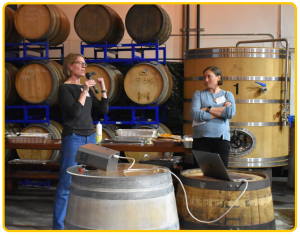 At the October 2025 dinner, Brandt presented on King County’s efforts to integrate health into the parks program. Highlights of their work include using health data to inform conservation decisions, collecting data on the health impacts of specific parks and offering a grants program to fund community-driven projects related to the development, maintenance and use of county parks.
“It was fun to reflect on how much this community has supported King County’s work in very tangible ways,” Brandt says, following her presentation. “Several people found me after the talk to share their work and ideas about future collaboration, which was perfect.”
For Brandt, one of the highlights of the community dinners is meeting new people and getting inspired by their work. “We’ve unlocked several great projects with partners at the dinners, and I look forward to many more to come,” she says.
In fact, unlocking new collaborations is one of the hallmarks of the community dinners. A Community Schoolyards project, based in Tacoma, is an ongoing collaboration by Dr. Pooja Tandon, Kathleen Wolf, PhD, and Cary Simmons that started at a Nature and Health Community Dinner. A few chance conversations at the event uncovered the team’s shared interests in improving health outcomes by increasing student and community access to nature. The conversations led to a successful grant application to the Interdisciplinary Research Leaders program, sponsored by the Robert Wood Johnson Foundation.
As a result of this connection and the funding, three asphalt-covered school yards at elementary schools in Tacoma, Wash. have been transformed with improved play spaces as well as additional trees and gardens. Several others have been identified as candidates for transformation. All sites were selected based on green space inequity – essentially, how far the surrounding neighborhoods are from other green parks. Wolf presented her work at a community dinner in January 2022.
But the community dinners have also faced challenges. Starting in 2020, the COVID-19 epidemic forced the team to “completely rethink how to connect with the community,” Alicia Keefe, program manager of the Center, says. “Keeping the spirit of our vibrant, communal dinners alive in an online format took creativity and intention”
Star Berry, the Center’s program manager at the time, shifted the programming to online lunchtime talks. These talks highlighted speakers from around the U.S. working on different applications of the science of the nature-health relationship. Berry also organized a large, international, online scientific meeting with over 200 speakers.
“To our knowledge, this was the first of its kind in the field and the research community loved it,” Keefe says. “Thus, the community managed to maintain a sense of connection and momentum throughout the pandemic, just with a different vibe.”
When the community dinners returned to in-person, the team was conscientious about the physical and mental safety of their attendees. They selected venues with ample airflow and plenty of space, so people could spread out.
 Shifting political attitudes towards environmental and health research have also put stress on the nature and health community. Keefe says flexible, unrestricted funding from REI has been critical to the longevity of the dinners through all of these changes. “We’re grateful to the REI Fund for deeply understanding and supporting our community-building work from the ground up,” Keefe says.
Despite the challenges, the community dinners have continued to evolve alongside the Nature and Health team and even inform major areas of their work. Just two years after the first community dinner, in 2017, the team published a groundbreaking research agenda on nature and health. Since then, the Nature and Health team has supported dozens of projects and nearly 200 publications. They also established the Northwest Nature and Health Coalition. A transdisciplinary working group centered on moving research to action, the Coalition is a more formal manifestation of their community.
The NW Nature and Health Coalition is now developing a follow-up to the 2017 research agenda — a framework and a series of case studies designed to inform policy and community decisions. These resources have been, and continue to be, shaped by feedback and insights from attendees of community dinners.
Community dinners have been sustained over the past decade because they center on an issue that speaks to so many people. They continue to thrive because the community behind them is fueled by passion and dedication to the cause.
And even as the community continues to grow, “the heart of the community dinners remains unchanged,” Bratman says. “These dinners have become anchors for our growing network — moments that renew our sense of connection, strengthen our shared purpose, and keep the community vibrant and evolving.”